
Why Your Body Feels Tight in Certain Places
Neck tightness, back pain, or heavy legs often come from deeper patterns in the body. Learn how your nervous system, fascia, and lymphatic flow shape tension and how massage therapy helps restore ease at Owater Spa in Brossard.
D Owater
3/22/20264 min read
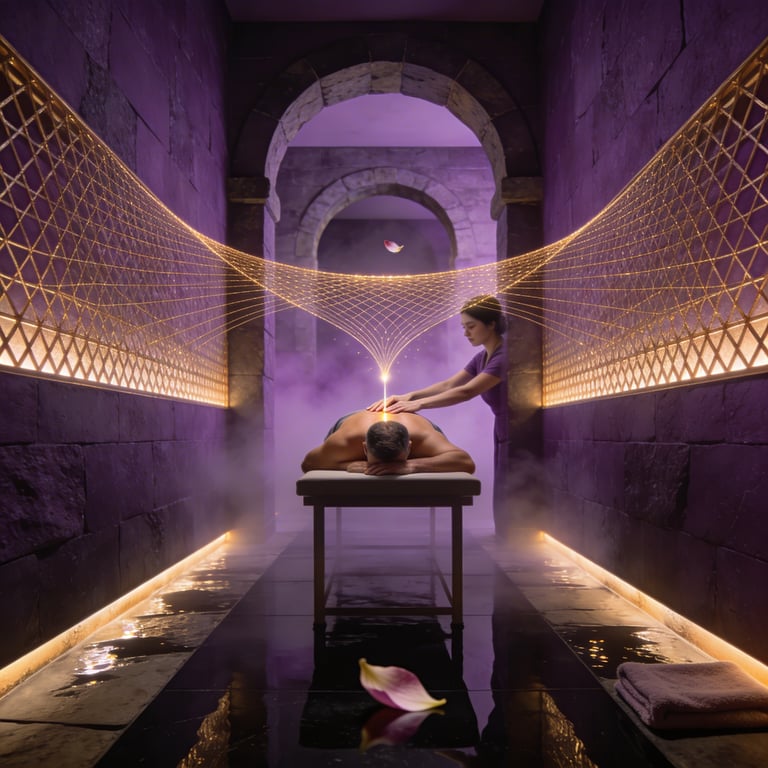
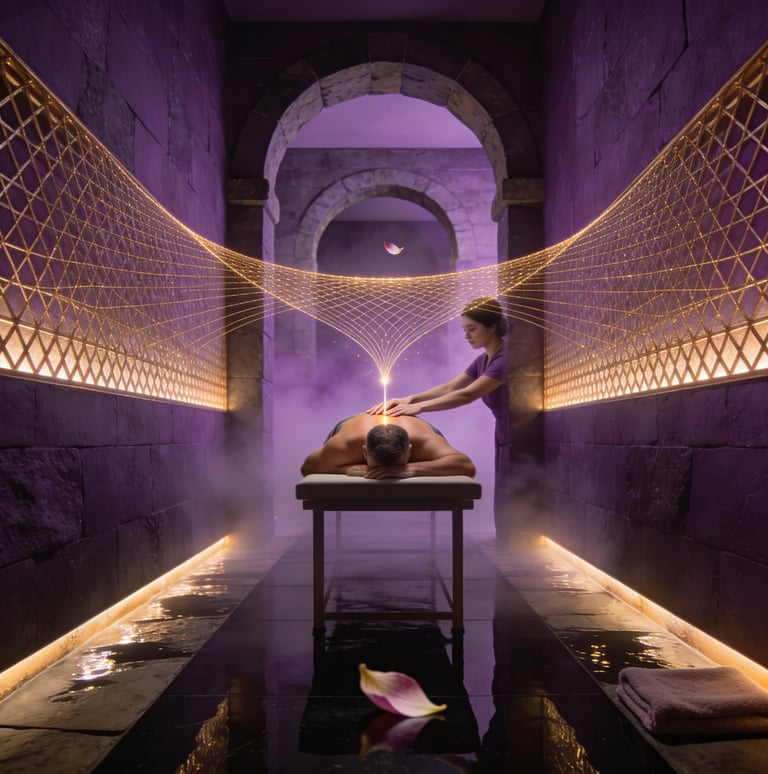
Your Body Doesn’t Tighten Up by Accident
Most people describe tension the same way.
“My shoulders are always tight.”
“My lower back keeps flaring up.”
“My legs feel heavy for no clear reason.”
It feels like one spot. One issue.
But your body doesn’t operate in isolated parts.
What you feel in one area is usually the result of a larger pattern developing over time. Your nervous system, fascia, and fluid flow all contribute to how that pattern forms and why it keeps repeating.
Massage helps because it doesn’t just address where it hurts.
It begins to shift what’s happening underneath.
Your Nervous System Sets the Tone of Your Body
Every muscle in your body is constantly receiving signals. Even at rest, your muscles are never fully “off.” They hold a baseline level of tone.
Stress quietly raises that baseline.
Not dramatically. Just enough that:
Your shoulders sit slightly elevated
Your jaw remains subtly clenched
Your lower back keeps working when it should be resting
Over time, this becomes familiar. It feels normal.
But here’s the key point:
Muscles don’t stay tight on their own. They are being told to stay that way.
Massage introduces new sensory input through the skin and deeper tissues. That input travels back to the brain and helps reduce the intensity of those signals.
That’s why even a slower, lighter technique can sometimes create a deep sense of release.
Fascia Keeps the Pattern Locked In
Fascia is not just something that wraps muscles. It is a continuous, responsive network that connects everything in your body.
When certain muscles stay slightly contracted for long periods, fascia adapts.
Gradually:
Hydration decreases
Tissue becomes denser
Layers lose their ability to glide smoothly
This is when people start to feel:
Pulling during movement
Stiffness that stretching doesn’t resolve
Discomfort that spreads instead of staying in one place
Massage changes the internal environment of that tissue.
Slow, sustained pressure supports fluid movement and allows layers to slide again. Once that glide returns, the body often feels lighter as a whole—not just in one area.
Fluid Flow Quietly & Shapes How You Feel
Beneath the surface, your body depends on constant movement of blood and lymph.
When tissues stay tense and fascia becomes less mobile:
Small vessels experience more pressure
Fluid exchange slows
Waste products linger longer
The lymphatic system is especially affected because it relies on movement and external pressure rather than a central pump.
When flow slows, people often notice:
A heavy or dense feeling in certain areas
Mild swelling or puffiness
Slower recovery after long days or physical effort
Massage creates a gentle wave of pressure through tissue. That rhythm helps restore movement in areas that have become stagnant, supporting your body’s natural ability to regulate itself.
Why One Area of Tension Affects the Whole Body
Everything in your body is connected.
If your upper back stays slightly engaged:
Fascia tightens in that region
Shoulder movement becomes restricted
The neck begins to compensate
Breathing patterns may change
At the same time, circulation becomes less efficient and sensitivity increases.
What started as mild tension can develop into:
Neck stiffness
Headaches
Fatigue
A constant sense of pressure
Massage works by changing the conditions that created these patterns, rather than chasing each symptom individually.
More Pressure Is Not Always More Effective
A common belief is that stronger pressure produces better results.
But your body doesn’t respond best to force. It responds to the quality of input.
If pressure feels aggressive, your nervous system may interpret it as a threat. Muscles can tighten further as a protective response.
When pressure is applied with the right pacing and intention:
The nervous system settles
Fascia begins to soften
Fluid flow improves
The result often feels deeper, even when the pressure is moderate.
What You’re Actually Feeling After a Massage
When these systems begin to shift together, the changes are often noticeable right away:
Warmth spreading through the body
Movement feeling easier without effort
Breathing becoming deeper
Mental tension fading
These aren’t vague sensations. They reflect real changes in:
Nervous system activity
Tissue tension
Circulatory flow
Why Consistency Changes Everything
One session can bring relief.
But regular sessions do something more meaningful. They help your body learn a new baseline.
Instead of defaulting to tension and guarding, your system begins to recognize relaxation as familiar.
That’s when results start to last.
A More Thoughtful Approach at Owater Spa
At Owater Spa in Brossard, the focus isn’t just on where you feel tight. It’s on understanding why that tension developed in the first place.
Clients from Brossard, Longueuil, Saint-Hubert, and across the South Shore often come in with one concern and leave noticing changes throughout their body.
That happens because the work focuses on the system—not just the symptom.
Final Thought: Your Body Is Consistent, Not Random
If the same areas keep tightening, it’s not random.
Your body has learned a pattern.
Massage helps change the signals, the structure, and the flow beneath that pattern.
And when those begin to shift, your body doesn’t just feel different.
It starts to function differently.
FAQs
Q: Why does tension keep returning to the same spot?
A: Your nervous system maintains familiar patterns of muscle activation, and fascia adapts over time. Without changing that pattern, the same area tends to tighten again.
Q: Why do I feel relief in areas that weren’t treated directly?
A: The body is interconnected through fascia and nervous system pathways, so changes in one area can influence others.
Q: Does lymphatic flow really affect how my body feels?
A: Yes. Slower fluid movement can contribute to heaviness, stiffness, and slower recovery, all of which influence tension.
Refresh, Rejuvenate, Reconnect.
105-1155 Boul Rome, Brossard, QC J4W 3J1
514-660-8656
© Owater Spa 2024. All rights reserved.