
The Hidden Connection Between Your Nervous System, Fascia, and Chronic Pain
Learn how your nervous system, fascia, and muscles work together in chronic pain, and how therapeutic massage relieves discomfort by addressing all three layers, not only tight muscles.

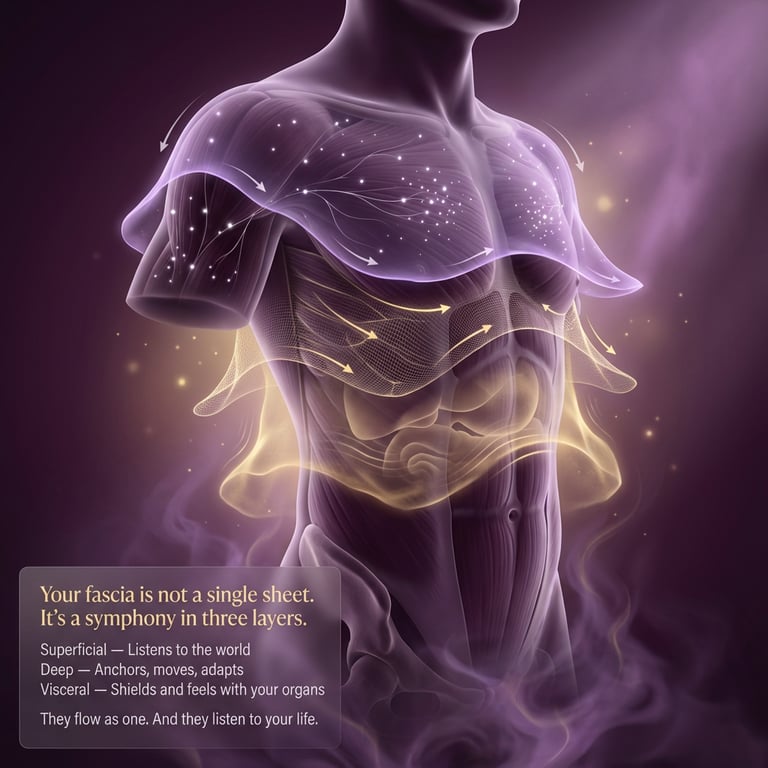
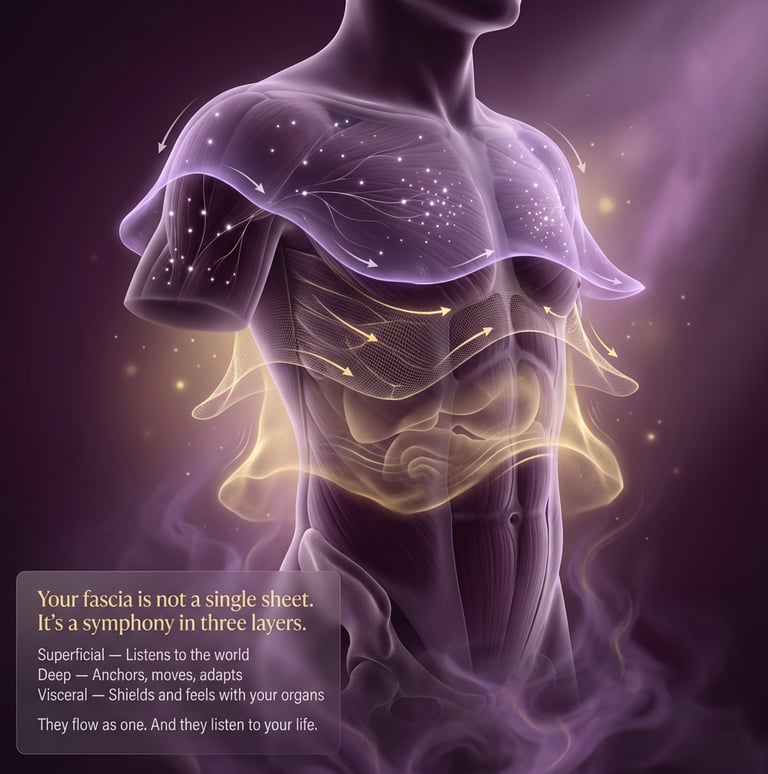
Most people think of chronic pain as a “muscle problem.” Sore spots, stiffness, and tension often receive all the attention. Yet pain often reflects a deeper story inside the body. Research points to an interconnected system involving the nervous system, muscle tissue, and fascia, the web of connective tissue surrounding almost everything inside you.
When massage therapy targets this full system, relief reaches far below the surface. Sessions shift from short-term comfort toward deeper healing, easier movement, and more stable long term change.
What Fascia Is and Why Your Body Depends on It
Fascia forms a continuous web of connective tissue that wraps around muscles, bones, organs, and nerves. In a healthy state, fascia feels supple and hydrated. Layers glide smoothly over each other and support free, fluid movement.
Stress, poor posture, lack of movement, and repetitive strain dry and stiffen fascia over time. The tissue starts to feel sticky or fibrotic, movement grows restricted, and pain often follows.
In that state, massaging only the muscle often brings short relief. Long lasting change asks for release within the fascia layers themselves, so gliding and hydration return.
How the Nervous System Shapes Chronic Pain
Ongoing stress - emotional, mental, or physical - keeps the nervous system in a state of alert. Many people live in a near constant version of fight or flight. Nerves stay sensitive, muscles brace, and fascia reacts by tightening.
Therapeutic massage helps move the body toward the rest and digest response, guided by the parasympathetic nervous system. Slow, intentional touch sends a clear signal of safety. That shift often breaks long standing pain loops, lowers stress levels, and supports deeper repair.
This calming effect often shows up as:
Less anxiety
Better sleep quality
A steadier mood and sense of well being
All of these changes matter for long term pain relief.
Muscle Tension: Only Part of the Story
Muscle tightness, knots, and trigger points show up often in people with chronic pain. Yet muscle tension alone does not fully explain what you feel. Tight muscles tug on surrounding fascia, compress nearby nerves, and restrict blood and lymph flow. Over time, this pattern feeds pain signals back to the brain and keeps the cycle going.
Massage helps loosen muscle fibers and soften knots. When a therapist also works with fascia and pays attention to nervous system responses, deeper layers start to shift. This combined approach:
Reduces pain signals
Improves movement and flexibility
Supports better posture and balance
In other words, muscles, fascia, and nerves begin to work together again instead of pulling your body in different directions.
Why Therapeutic Massage Reaches All Three Layers
A well designed therapeutic massage session supports fascia, muscles, and the nervous system in one experience.
Fascia release and hydration
Sustained, mindful pressure and slow, specific techniques help rehydrate fascia and loosen adhesions. Layers regain a smoother glide, so your body moves with less drag and pulling.
Neurological reset
Massage touch sends a steady flow of sensory signals to the brain. With the right pace and pressure, those signals promote relaxation, lower nerve excitability, and support a healing mode rather than a defensive one.
Improved circulation
As muscle and fascia release, blood flow and lymph movement improve. Fresh oxygen and nutrients reach sore areas more easily, and waste products clear more efficiently. Stiffness tends to drop, and tissue quality often feels warmer and softer.
Muscle relaxation and mobility
By working from surface muscles toward deeper fascia, therapeutic massage supports better range of motion, less stiffness, and improved alignment over time. Clients often notice easier posture, lighter movement, and less effort during daily tasks.
Conditions That Often Respond Well to This Approach
A fascia informed, nervous system aware approach often supports people dealing with:
Chronic neck and back pain related to work, posture, or long hours of sitting
Tension headaches and stress driven muscular pain
Myofascial pain, where tight fascia plays a major role in discomfort
Stress and anxiety driven muscle tension, sleep troubles, and drops in overall energy and well being
Conclusion
Chronic pain rarely comes from “tight muscles” alone. A more complete picture includes nervous system overload, long standing muscle tension, and restrictions in fascia. Together, these factors heighten pain signals, limit movement, and drain quality of life.
Therapeutic massage that addresses all three layers offers more than a short break from discomfort. Sessions support deeper healing, better mobility, and a calmer inner state. For many people, a fascia informed, nervous system aware massage plan becomes the missing link between temporary relief and steady, long term change.
FAQs
Q: What makes therapeutic massage different from a regular spa massage?
Therapeutic massage focuses on more than relaxation. A session targets muscles, fascia, and nervous system regulation. The goal is deeper healing, easier movement, and longer lasting relief rather than only a soothing experience.
Q: How often should I receive fascia focused massage for lasting results?
Frequency depends on pain levels, stress load, and how long symptoms have been present. Many people respond well to more frequent sessions at the beginning, then gradual spacing as fascia hydration, nervous system balance, and mobility improve.
Q: Is deep tissue or fascia focused massage painful?
Pressure sometimes feels intense, especially in tight or sensitive areas. A skilled therapist stays in close communication, adjusts techniques to your comfort range, and works within a safe edge. Many clients describe the sensation as strong yet deeply relieving rather than painful.
Respirez. Relâchez. Reconnectez.
© Owater Spa 2024. Tous droits réservés.